
Victor Richardson
Artist
Biography
Artist's Statement
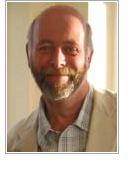
I was born in East Belfast. The big yellow cranes of Harland and Wolf loomed over the rooftops of the rows of tiny red brick terrace houses that were my world. My father, like so many others, worked in the shipyard. He was a carpenter, a master at billiards and he liked a pint. My mother on the other hand was religious. She believed the world was about to end in the final day of wrath that the Bible calls Armageddon. As a child I was often told that I would never grow old. Her belief was that the end was so close, I probably would never finish school. As I grew up, our friends were people who thought that there had actually been a Garden Of Eden. A lovely place full of beautiful trees and crystal clear rivers. You can imagine how this fired the imagination of a boy, who had from an early age, loved to draw.
Now in my sixties and having finished my education a long time ago, I have had to come to terms with the fact that not only have I grown old, but my demise is fast approaching. Looking back it is perhaps no surprise that dreams of a lost Eden have informed my work. I have made a career painting verdant watery landscapes, from the vast humid marshes of the American Deep South, to the intimate, intricate medieval canals of the Marais Poitevin in Western France. Echoes of that lost world can even be found in the glittering dappled light falling like an enchantment on the still water of Dublin's Grand Canal. With eyes half closed, drowsy in summer heat, one can almost glimpse it.
The Way I Paint
I am self taught - an Autodidact to use the fancy word for it. For as long as I can remember I could draw without difficulty. I was given lessons in oil painting from the age of 10 by a family friend who was an established painter in Belfast. I learned how to mix colour, prepare and stretch canvas, and to do many of the practical tasks of the painter's craft. It was an invaluable lesson and my only formal training. As I grew older I made regular visits to the Ulster Museum, lingering in the galleries for hours, lost in wonder. The first time I travelled to Dublin to visit the National Gallery and the Hugh Lane collection, I thought I had died and entered paradise.
I married and moved to Cork and I gradually began to sell drawings, first in charcoal and then in pastel. It was a great stroke of luck to approach a major Dublin gallery and be accepted on my first attempt. I will always be grateful to Suzanne MacDougald who was willing to take a chance and show my work, mainly pastels, in the Solomon Gallery for the next 25 years. I gradually developed an intuitive approach to colour, which I am told interprets the painting method that George Seurat called Chromoluminarism. The individual dots and strokes of colour, and the juxtaposition of warm and cold hues, create an optical effect that is like a vibration. This tessellation enhances the vibrancy of colour and while the broken surface appears to move, there is also stillness, a sense of tranquility.
I was born in East Belfast. The big yellow cranes of Harland and Wolf loomed over the rooftops of the rows of tiny red brick terrace houses that were my world. My father, like so many others, worked in the shipyard. He was a carpenter, a master at billiards and he liked a pint. My mother on the other hand was religious. She believed the world was about to end in the final day of wrath that the Bible calls Armageddon. As a child I was often told that I would never grow old. Her belief was that the end was so close, I probably would never finish school. As I grew up, our friends were people who thought that there had actually been a Garden Of Eden. A lovely place full of beautiful trees and crystal clear rivers. You can imagine how this fired the imagination of a boy, who had from an early age, loved to draw.
Now in my sixties and having finished my education a long time ago, I have had to come to terms with the fact that not only have I grown old, but my demise is fast approaching. Looking back it is perhaps no surprise that dreams of a lost Eden have informed my work. I have made a career painting verdant watery landscapes, from the vast humid marshes of the American Deep South, to the intimate, intricate medieval canals of the Marais Poitevin in Western France. Echoes of that lost world can even be found in the glittering dappled light falling like an enchantment on the still water of Dublin's Grand Canal. With eyes half closed, drowsy in summer heat, one can almost glimpse it.
The Way I Paint
I am self taught - an Autodidact to use the fancy word for it. For as long as I can remember I could draw without difficulty. I was given lessons in oil painting from the age of 10 by a family friend who was an established painter in Belfast. I learned how to mix colour, prepare and stretch canvas, and to do many of the practical tasks of the painter's craft. It was an invaluable lesson and my only formal training. As I grew older I made regular visits to the Ulster Museum, lingering in the galleries for hours, lost in wonder. The first time I travelled to Dublin to visit the National Gallery and the Hugh Lane collection, I thought I had died and entered paradise.
I married and moved to Cork and I gradually began to sell drawings, first in charcoal and then in pastel. It was a great stroke of luck to approach a major Dublin gallery and be accepted on my first attempt. I will always be grateful to Suzanne MacDougald who was willing to take a chance and show my work, mainly pastels, in the Solomon Gallery for the next 25 years. I gradually developed an intuitive approach to colour, which I am told interprets the painting method that George Seurat called Chromoluminarism. The individual dots and strokes of colour, and the juxtaposition of warm and cold hues, create an optical effect that is like a vibration. This tessellation enhances the vibrancy of colour and while the broken surface appears to move, there is also stillness, a sense of tranquility.